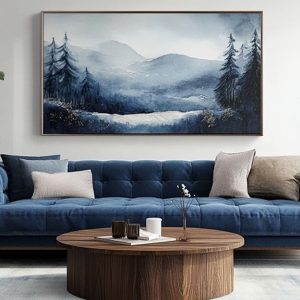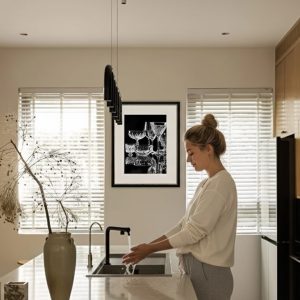

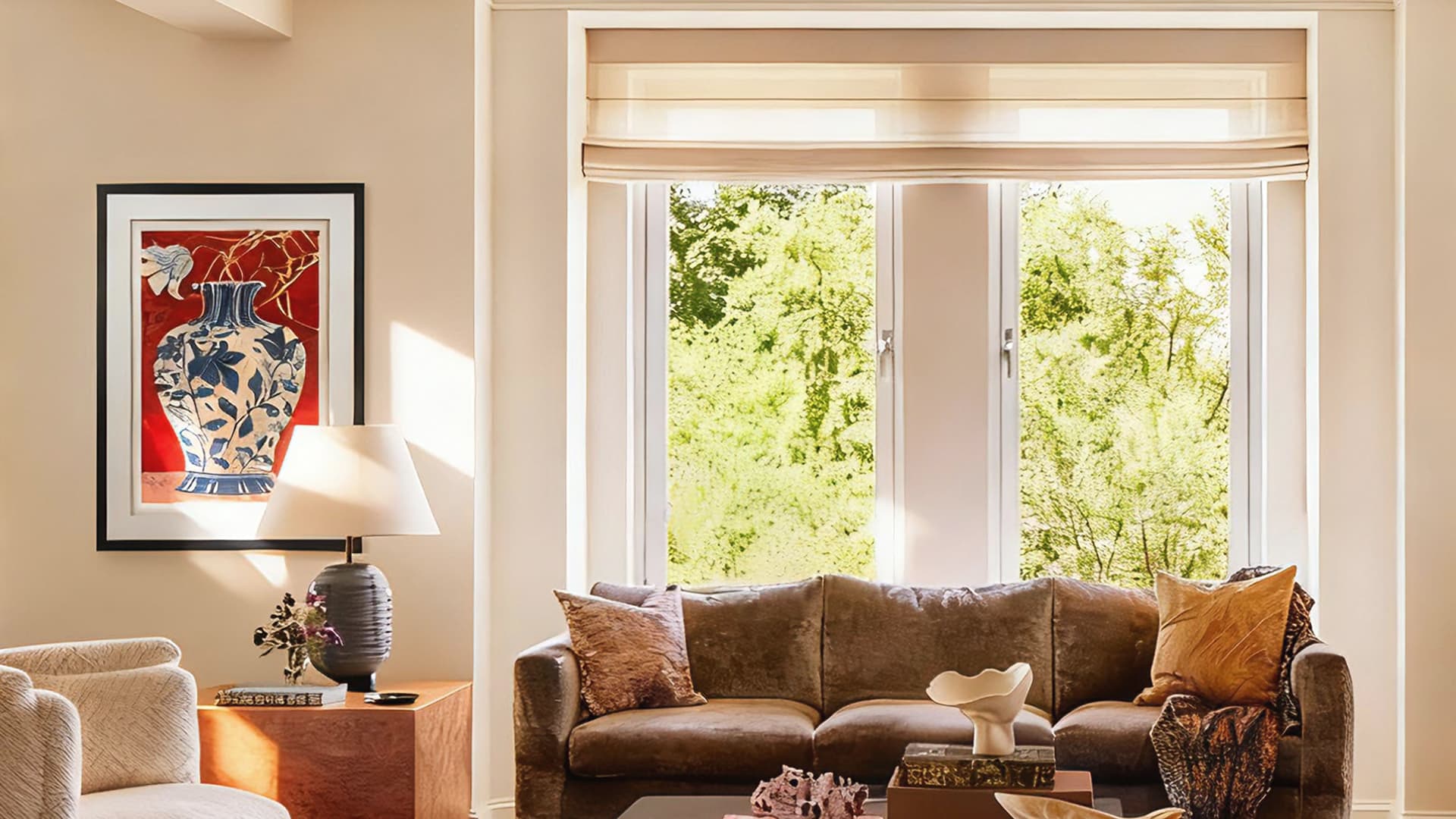
The size of wall art is like the tailoring of a garment, which defines the style of the entire space. Choosing an unsuitable size can diminish even the most stunning piece’s impact. For instance, a painting that’s too small on a large blank wall is like placing a single coffee table in a grand banquet hall — it feels lost and isolated, amplifying the space’s emptiness and monotony. In contrast, a well-sized artwork acts as a finishing touch, instantly elevating the atmosphere while adding rich visual depth.
- Creating a Focal Point: A properly sized artwork naturally draws the eye, becoming the visual center of the room.
- Balancing Spatial Proportions: The relationship between space and art hinges on balanced scale. Large spaces require large-scale artworks to create a sense of presence; otherwise, they can feel empty and uninspired. In small spaces, it is more appropriate to choose exquisite small to medium-sized artworks, which not only retain the presence of art but also prevent overwhelming the surroundings.
- Shaping the Atmosphere: Different sizes of artwork create distinct visual dynamics. Large works offer strong impact, while smaller pieces evoke a sense of delicacy and softness.
- Elevating the Style: A well-proportioned wall art piece makes a space feel more refined, professional, and intentionally designed.
How to Choose the Perfect Size for Your Wall Art
Measure Your Wall
Accurately measuring the wall is the first step before selecting artwork. Focus on the usable wall area for hanging, excluding doors, windows, alcoves, air conditioning units, and other fixed elements. For example, if the total width of the wall is 3 meters and there is a 1-meter-wide window in the middle, then the usable width for hanging art is about 2 meters.
In addition, for irregular walls (e.g., sloped ceilings or corners), you need to consider their actual contours and choose pieces with appropriate shapes and proportions to ensure harmony.
Furniture to Artwork Ratio
The size of the artwork should correspond to the size of the furniture against the wall, especially core pieces like sofas, bedheads, dining tables, etc.:
- If the artwork is to be hung above a sofa, it should span 2/3 to 3/4 of the sofa’s width for a more coherent look.
- An artwork that’s too small may appear to “float” on the wall and lack presence, while one that’s too large may feel overwhelming.
Don’t Forget the Frame
The frame is also an important part of the overall size, you shouldn’t focus solely on the artwork itself when choosing. A thin frame can make wall art look delicate and understated, working well in small spaces to avoid visual bulk; a thick frame feels sturdier and more three-dimensional, suiting large-scale wall art and enhancing the artistic atmosphere.
At the same time, the frame width adds to the artwork’s total size: a 50 cm wide artwork with a 10-cm wide frame will have an overall width of 70 cm. This “invisible size” must be taken into account to ensure the overall proportions align with the walls and furniture. For a grouping of multiple artworks, the spacing between frames should not be ignored to ensure the overall layout remains unified and aesthetically pleasing.
Consider Room Size and Ceiling Height
Overall space size and ceiling height also influence artwork size:
- For rooms with low ceilings (less than 2.5 meters), medium-sized works are recommended to avoid a sense of visual oppression.
- For rooms with high ceilings or open spaces, larger artworks with strong vertical presence are suitable. These can effectively fill the space, enhance depth, and create visual impact.
- A small space doesn’t necessarily mean you have to stick to small paintings. Choosing a bold, larger piece can create surprising visual tension.
Size Is Just the Beginning—Let Wall Art Become an Extension of Your Personality
Choosing the right size is only the first step in creating perfect wall art; what really brings a wall to life is the depth of your personality and preferences. Don’t be confined by traditional size rules, instead, boldly experiment with different combinations. Experiment with mixing hanging styles, vertical arrangements, symmetrical layouts, and more to give the wall more depth and rhythm. Interestingly, mixing artworks of different sizes can sometimes create a more curated and visually engaging look.
Of course, if you’re still looking for inspiration or want a more customized solution, feel free to contact us. We’ll be happy to provide professional, personalized advice to help you achieve your desired wall art effect.